
Electrical problems can create difficult decisions for commercial facility managers. When equipment stops working, lighting fails, or a breaker trips repeatedly, the immediate priority is understanding the problem and restoring safe operation. However, waiting for something to fail is not an effective long-term maintenance strategy.
Understanding the difference between electrical troubleshooting vs preventive maintenance helps Houston businesses decide when they need corrective service, when scheduled maintenance is appropriate, and when both approaches should work together.
For manufacturing facilities, warehouses, office buildings, and other commercial properties, the right approach depends on equipment condition, operating requirements, and the symptoms being reported.
What Is Commercial Electrical Troubleshooting?
Electrical troubleshooting is the process of investigating a specific problem to determine its cause and identify an appropriate corrective action.
Unlike routine maintenance, troubleshooting usually begins when something is already operating incorrectly. The issue may involve an unexpected shutdown, inconsistent equipment performance, an electrical fault, or an interruption affecting part of a facility.
Common situations that may require professional electrical troubleshooting include:
- Repeated circuit breaker trips.
- Unexpected power interruptions affecting equipment or work areas.
- Lighting circuits that stop working or behave inconsistently.
- Motors, controls, or machinery that experience unexplained electrical shutdowns.
- Electrical panels or distribution equipment showing signs of abnormal operation.
- Recurring faults after an earlier repair.
The objective is not simply to reset equipment and resume operations. A qualified electrician needs to determine what caused the condition and whether the affected equipment can be returned to service safely.
For facilities experiencing active electrical problems, Allied Contractors provides commercial electrical services in Texas, including troubleshooting, repairs, installations, and ongoing electrical support.
What Is Preventive Electrical Maintenance?
Preventive electrical maintenance takes a different approach. Instead of waiting for equipment to fail, a facility establishes planned activities to evaluate electrical equipment condition and address maintenance needs.
The purpose is to identify developing concerns, maintain equipment reliability, and organize corrective work before problems become unexpected interruptions.
A preventive maintenance program may involve:
- Reviewing electrical equipment condition and maintenance history.
- Scheduling inspections and testing appropriate to the equipment.
- Examining reported operating abnormalities or recurring issues.
- Reviewing electrical distribution equipment and connections.
- Evaluating maintenance recommendations and outstanding repairs.
- Documenting completed work and planning future service intervals.
The exact maintenance scope and frequency should reflect the equipment, manufacturer guidance, operating environment, applicable requirements, and qualified professional assessment.
Businesses looking to organize scheduled service can learn more about Allied Contractors’ electrical preventive maintenance services.
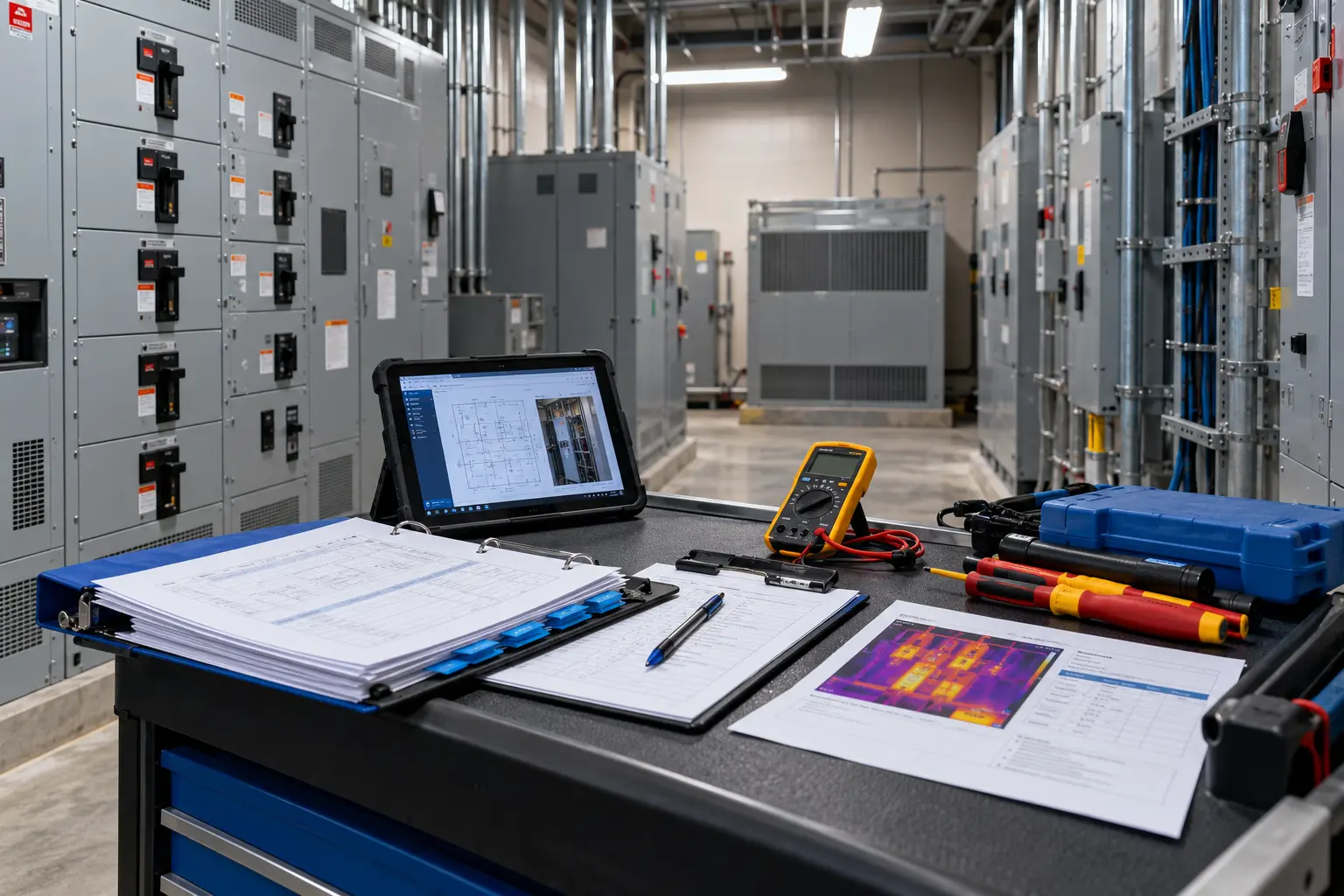
Electrical Troubleshooting vs. Preventive Maintenance: Key Differences
Although both services involve evaluating electrical systems, they serve different operational purposes.
When the Work Begins
Troubleshooting generally begins after an equipment problem, unexpected operating condition, or reported malfunction.
Preventive maintenance begins with a planned schedule or an equipment-condition review, even when the electrical system appears to be operating normally.
Primary Objective
Troubleshooting focuses on identifying the cause of an existing problem and determining the necessary repair or corrective action.
Preventive maintenance focuses on monitoring equipment condition, identifying maintenance needs, and reducing the likelihood of avoidable failures.
Scheduling and Operational Impact
Reactive troubleshooting may require immediate attention or work outside the facility’s preferred maintenance schedule. Access restrictions, production requirements, and equipment availability can make the response more complicated.
Preventive maintenance can often be scheduled around business operations, planned shutdowns, and equipment access windows.
Neither approach eliminates the need for the other. A well-managed facility should be prepared for unexpected electrical problems while maintaining a structured plan for routine service.
When Should a Facility Request Electrical Troubleshooting?
Troubleshooting becomes the priority when a facility experiences an active electrical problem that requires investigation.
For example, consider a warehouse where a conveyor system unexpectedly stops operating. The immediate concern is determining whether the problem involves the equipment, controls, electrical supply, protective devices, or another component.
Simply restarting the system without understanding the problem could leave the underlying condition unresolved.
Facility managers should document the symptoms, affected areas, recent equipment changes, and timing of the failure. This information can help qualified personnel plan an effective investigation.
When there are indications of overheating, electrical arcing, smoke, damaged equipment, or another potentially hazardous condition, personnel should follow established emergency procedures and avoid attempting electrical repairs themselves.
When Does Preventive Maintenance Make More Sense?
Preventive maintenance is appropriate when facility teams want to evaluate equipment condition and reduce dependence on unexpected service calls.
It can be particularly valuable for properties with older equipment, demanding operating environments, frequent production schedules, or a history of recurring electrical problems.
Common maintenance planning situations include:
- A manufacturing facility preparing for an annual maintenance shutdown.
- A distribution center reviewing equipment after years of continuous operation.
- A property manager coordinating maintenance across several buildings.
- A commercial facility planning electrical upgrades or equipment replacements.
- A facility documenting repeated electrical faults for longer-term corrective planning.
Preventive maintenance may include condition-assessment techniques such as infrared thermography, where appropriate. Thermal observations can help identify temperature differences that warrant further professional evaluation, but they do not independently establish the cause of every electrical problem.
Learn more about Allied Contractors’ electrical thermal imaging and inspection services.

Why Commercial Facilities Often Need Both Approaches
Electrical troubleshooting and preventive maintenance are most useful when they support a coordinated facility management strategy.
Consider a commercial building experiencing repeated lighting circuit failures.
First, troubleshooting is needed to identify the immediate electrical problem and determine the appropriate corrective action.
After the issue is addressed, maintenance personnel can review whether similar equipment or circuits require additional inspection, whether previous problems were documented, and whether the facility’s existing maintenance plan should be adjusted.
That creates a more informed response than treating every failure as an isolated event.
For facilities that require continuing support, an electrical service contract can establish a defined scope for planned maintenance, troubleshooting, inspections, and related electrical work.
A Practical Decision Checklist for Facility Managers
Before requesting electrical service, facility managers can use the following questions to clarify the immediate need.
Is There an Active Electrical Problem?
If electrical equipment has stopped functioning, is behaving abnormally, or is creating a potential safety concern, professional troubleshooting may be the immediate priority.
Is the Facility Planning Ahead?
If operations are stable but equipment is aging, maintenance records are incomplete, or a shutdown is approaching, preventive maintenance planning may be the better starting point.
Has the Same Problem Happened Before?
Recurring failures may justify both immediate troubleshooting and a broader review of maintenance history, related equipment, and unresolved recommendations.
Can the Work Be Coordinated Around Operations?
Planned inspections and maintenance activities can often be aligned with scheduled downtime. Unexpected failures may require a different response and additional coordination with affected departments.
Are Electrical Records Up to Date?
Accurate documentation helps facility teams understand prior repairs, identify repeated concerns, and communicate effectively with electrical contractors.
Building a More Reliable Electrical Maintenance Strategy
A useful electrical maintenance strategy does not begin and end with a calendar. It should also account for the facility’s actual operating experience.
Maintenance records, equipment condition, manufacturer recommendations, previous inspection results, and recurring service issues can all inform future priorities.
When an electrical problem occurs, documenting the symptoms and corrective action can provide valuable information for subsequent maintenance planning.
Similarly, when scheduled inspections identify conditions requiring repair, those findings should be prioritized according to their significance and operational impact.
This approach helps facility teams connect immediate electrical service needs with longer-term reliability goals.
Electrical Troubleshooting and Maintenance in Houston
Commercial and industrial facilities throughout Houston rely on electrical distribution systems, equipment connections, controls, lighting, and other infrastructure to support daily operations.
Some electrical needs require troubleshooting and corrective service. Others are best addressed through planned inspections, preventive maintenance, or scheduled improvement projects.
Allied Contractors supports businesses with commercial and industrial electrical services, helping facility managers evaluate their needs and coordinate appropriate electrical work.
Whether your facility is experiencing a recurring electrical issue or planning a preventive maintenance program, contact Allied Contractors to discuss your electrical service requirements.